ADR Author
Turn a decision into a clean, defensible record in minutes.
Ask for an ADR, a C4 diagram or an Essential Eight assessment in plain English. Get back work that follows how an experienced practitioner does it, with current sources cited, not generic AI filler.
One payment, no subscription · free updates · works in Claude, ChatGPT, Copilot, Cursor, Codex and local models
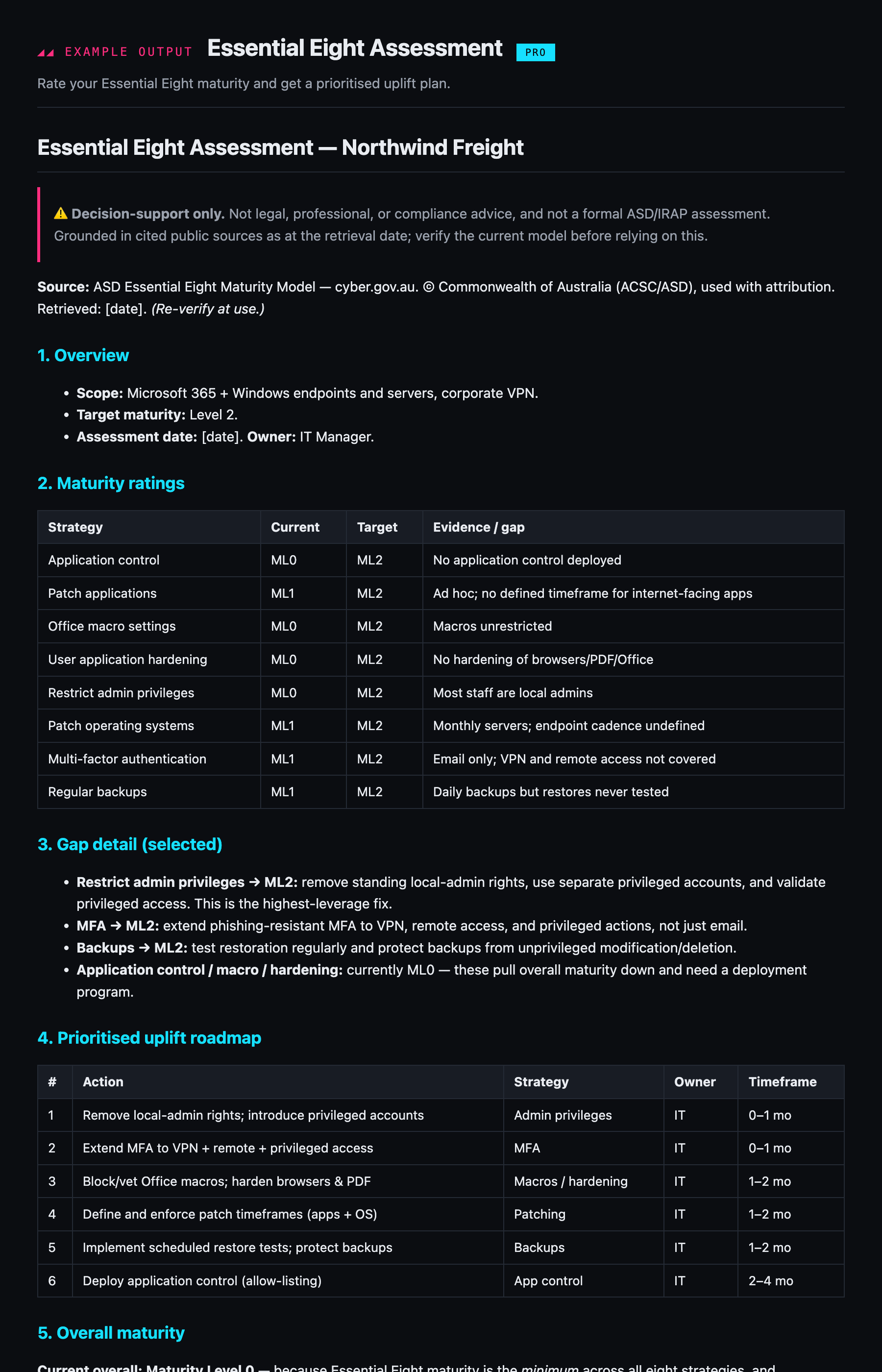 You get this ◢◢
You ask. You get this.
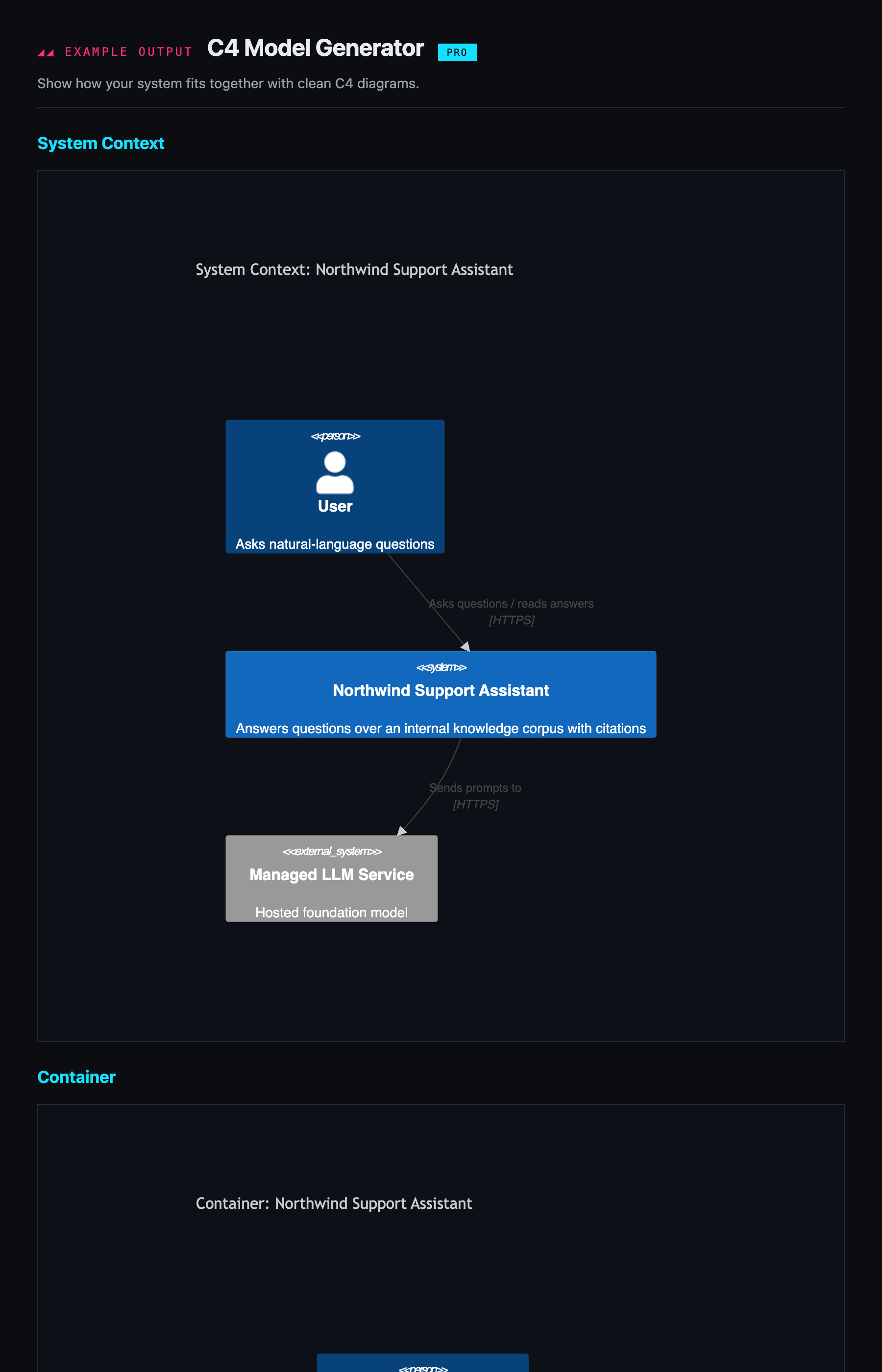 C4 Model Generator“Diagram the architecture of the Northwind Support Assistant, our customer-support knowledge assistant. Users query it through a web app; a…”
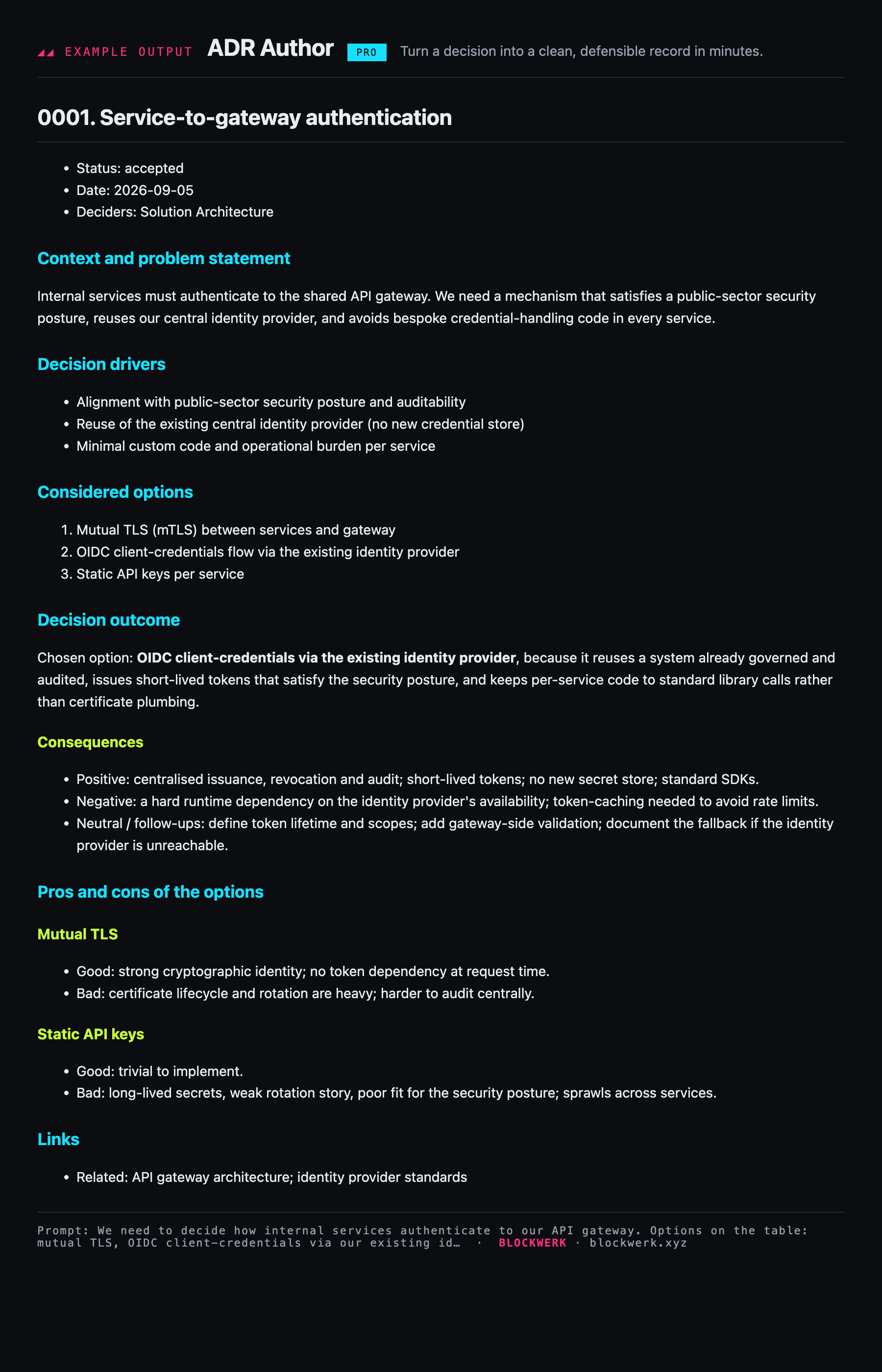 ADR Author“We need to decide how internal services authenticate to our API gateway. Options on the table: mutual TLS, OIDC client-credentials via our…”
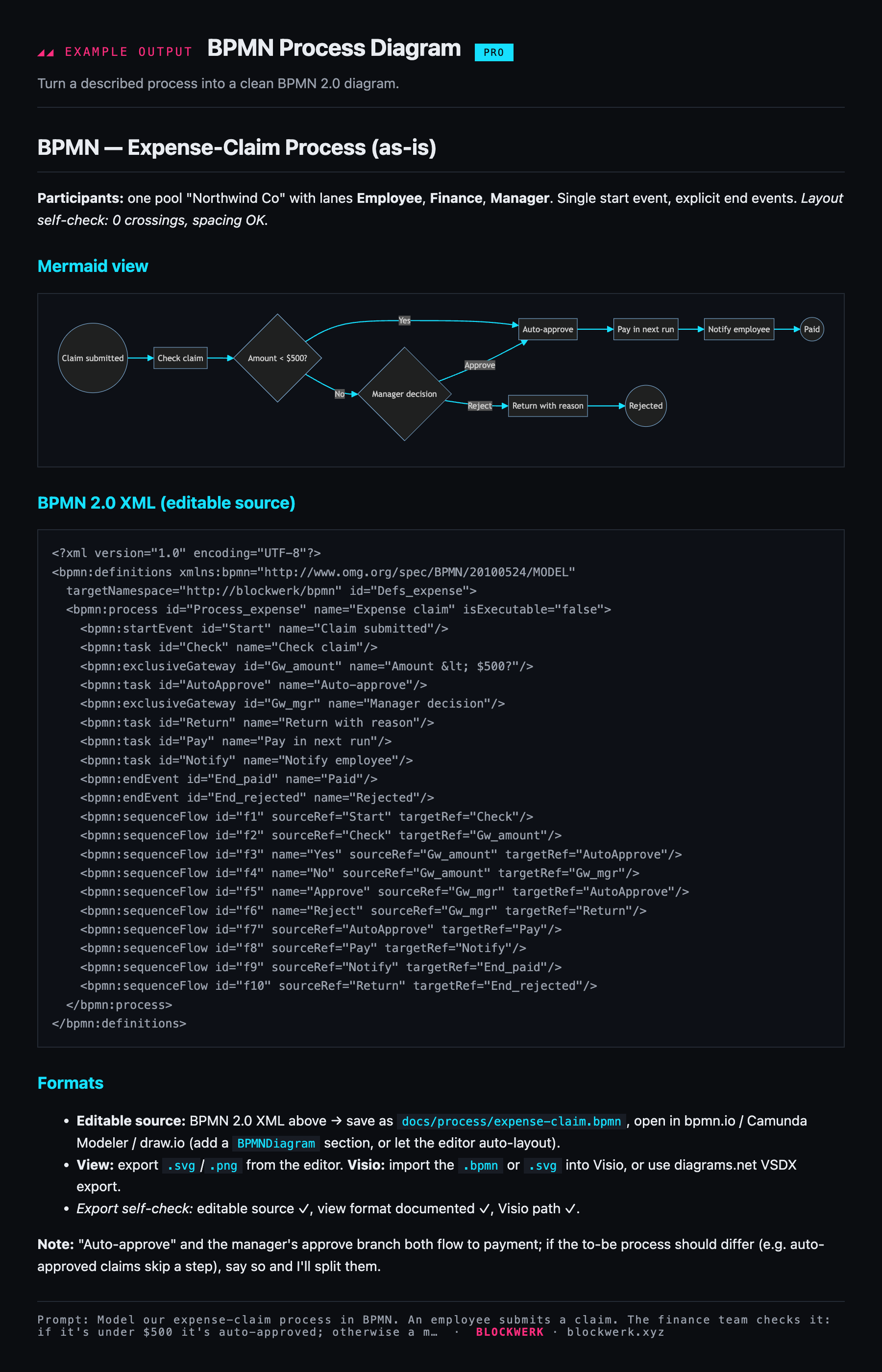 BPMN Process Diagram“Model our expense-claim process in BPMN. An employee submits a claim. The finance team checks it: if it's under $500 it's auto-approved;…”
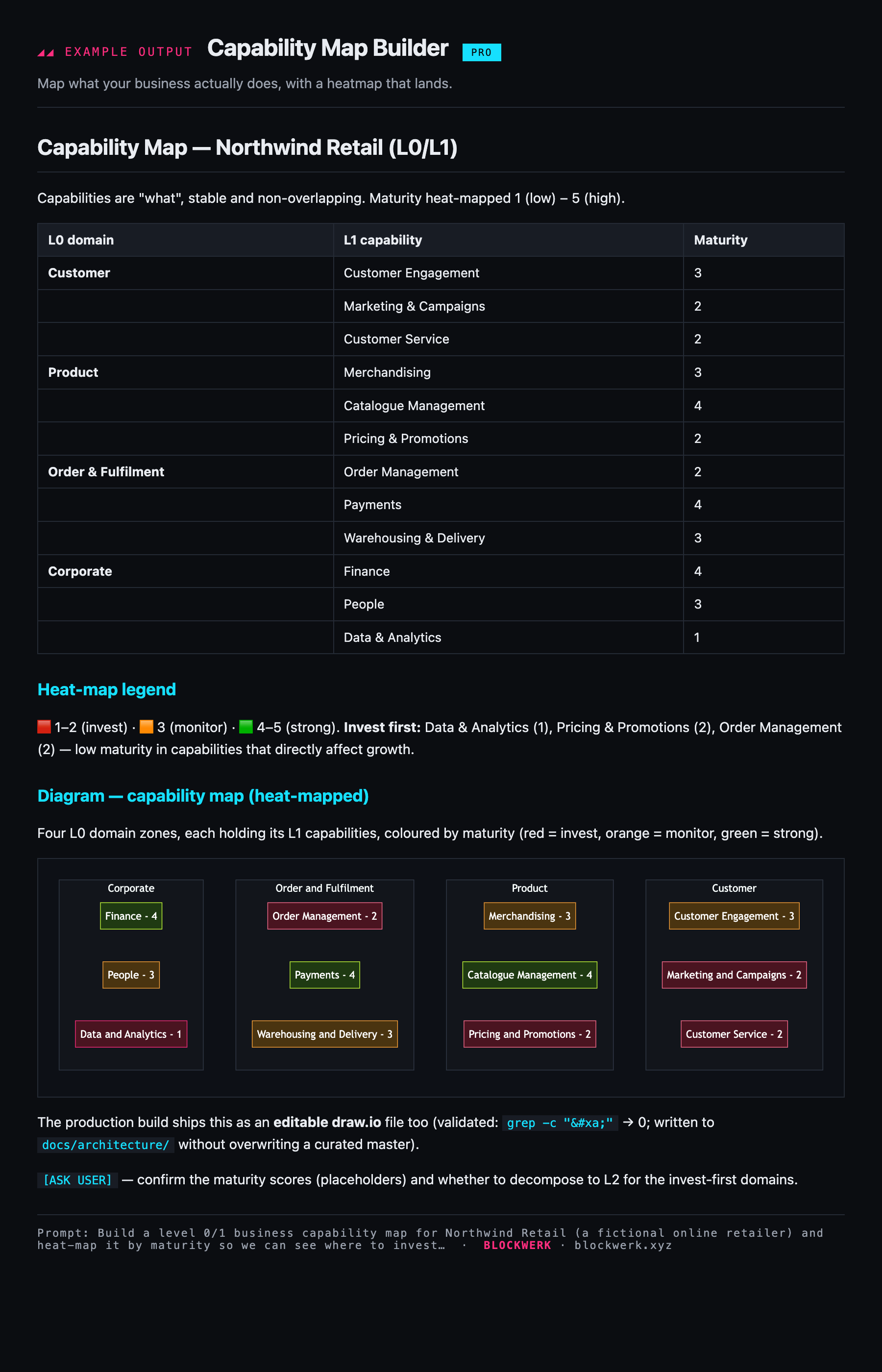 Capability Map Builder“Build a level 0/1 business capability map for Northwind Retail (a fictional online retailer) and heat-map it by maturity so we can see…”
Find the work you do every week.
All 62 skills come with one payment, plus new skills as free updates. Tap any skill to see a real example.
Turn a decision into a clean, defensible record in minutes.
See every decision, what's blocked, and what's next at a glance.
Instantly spot what's missing from your architecture docs.
Track significant requirements and prove each one is addressed.
Show how your system fits together with clean C4 diagrams.
Show how data moves between processes, stores and outside actors.
Show where everything runs — nodes, zones, and network paths.
Generate clean draw.io architecture diagrams from a prompt.
Model your data as a clean ERD with keys and cardinality.
Give every session one source of truth for your project.
Write the HLD/LLD that turns a decision into a buildable design.
Draw the right UML diagram — class, sequence, state and more.
Rate your apps and decide what to tolerate, invest, migrate or retire.
Proper ArchiMate views, drawn for you, without the notation headaches.
Set architecture principles that actually hold teams to account.
Write a target-state vision that guides without naming vendors.
Map what your business actually does, with a heatmap that lands.
Map your systems to HERM and diagram the interfaces (bring your own HERM).
Write a CIO-grade IT strategy the board will actually back.
Define a reusable target pattern teams can design against.
Work through the TOGAF ADM phases and get the deliverables that matter.
Sequence the path from today's mess to your target state.
Know exactly where you stand on ISO 42001, with next steps.
Find and flag Australian PII before it becomes a problem.
Classify and label your data by sensitivity, with handling rules.
Check where your data lives and whether that's actually allowed.
Check a government digital service against the DTA's standard.
Find where sensitive data can leak, and how to lock it down.
Rate your Essential Eight maturity and get a prioritised uplift plan.
Draft a Queensland-government FAIRA AI risk statement, done right.
Design sensitivity labels and rights that travel with your files.
See your ISO 27001 gaps and what to fix first.
Get a system assessment-ready before you engage an IRAP assessor.
Map your system's controls to the ASD ISM and find the gaps.
Run a Privacy Impact Assessment before a project handles personal data.
Check protective security against the PSPF across all six domains.
Check recordkeeping, retention, and disposal obligations are met.
Review a digital product against WCAG 2.2 AA and get fixes.
Run sharp sprint ceremonies with ready-made agendas and prompts.
Document a REST API so developers can call it on the first try.
Turn a described process into a clean BPMN 2.0 diagram.
Go from a messy brief to a clear business requirements doc.
Build a decision-ready business case with options and benefits.
Publish clean, well-structured Confluence pages in one pass.
Weigh options with NPV, payback and a clear sensitivity check.
Explore a dataset and get findings, charts and the numbers behind them.
Turn scattered docs into a queryable knowledge graph.
Turn business needs into functional requirements you can build from.
Break work into clean Jira epics, stories and tickets fast.
Design a clean, valid OpenAPI 3.1 contract for your REST API.
Rewrite dense text into clear, plain language that still means it.
Turn a messy changelog into release notes users understand.
Plan how you'll gather requirements — techniques, people, questions.
Prove every requirement is tested, and catch the gaps.
Write an operational runbook someone can follow at 3am.
Write a Standard Operating Procedure that's actually followed.
Map stakeholders and set clear RACI accountability per activity.
Produce a complete, traceable test plan without the busywork.
Turn functional needs into a build-ready technical spec.
Write a task-based user guide people can actually follow.
Write INVEST user stories with Given/When/Then acceptance criteria.
Sketch lo-fi wireframes and hi-fi mockups for web and mobile.
Hi, I'm Matt Wagstaff, a senior solutions architect working in enterprise and Australian public-sector delivery. I built Blockwerk from how I actually do ADRs, architecture reviews and AI-governance assessments, so the AI does it properly the first time. Find me on LinkedIn.
All 62 skills, every platform, future updates included. Pays for itself the first time it saves you an afternoon on a document. Invoice emailed. Most people put it through as a work tool.
Launch offer: 20% off with code LAUNCH at checkout.
Copy this into an email or chat to your manager:
An AI assistant you already use (Claude, ChatGPT, Copilot, Cursor, Codex or a local model) and a free GitHub account. After you pay you get an invite to the private repo, then one install command.
Yes. Diagrams come as editable files: .drawio for diagrams.net, and .bpmn for BPMN tools such as Camunda and Signavio. To get a diagram into Visio, open the .drawio in diagrams.net (free) and choose Export as VSDX. You get shapes and connectors you can edit in Visio, not a flat picture. C4, ERD and UML diagrams come as Mermaid by default; ask for the .drawio version.
No. The governance skills are decision-support: they cite the current published source and help you do the work, but the decisions stay yours. See the disclaimer.